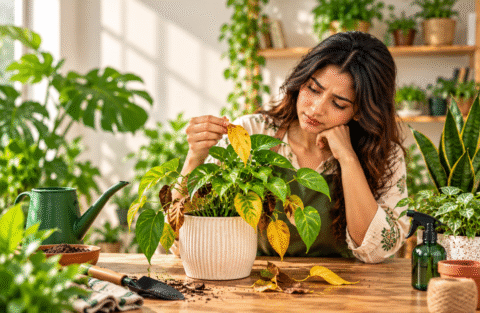


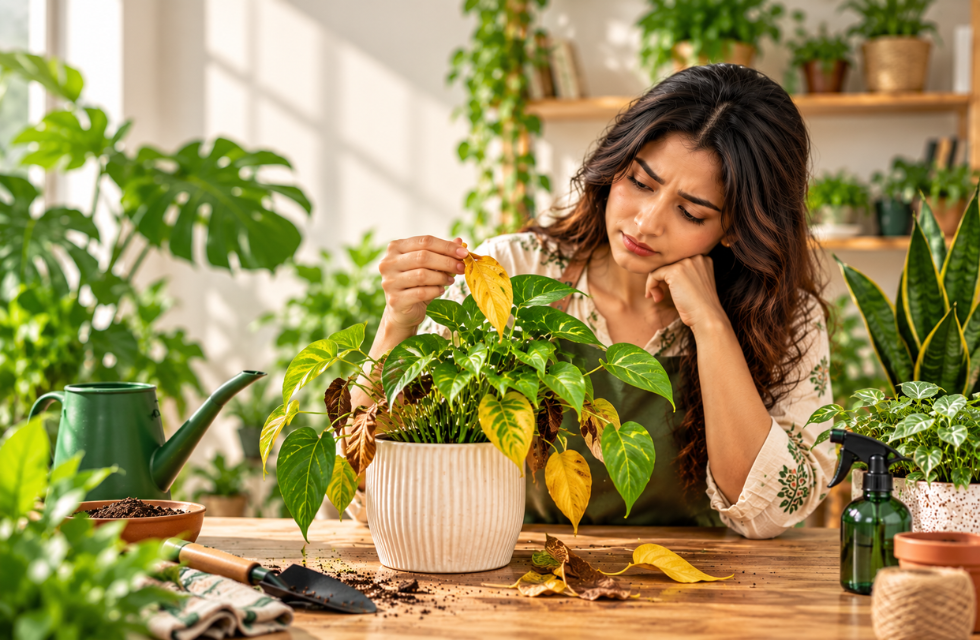
Drooping leaves, yellow patches, crispy brown edges, a stem that suddenly feels soft. When a houseplant starts to fail, it is rarely random. In almost every case the plant is reacting to one of a handful of problems with water, light, air, roots or pests, and each one leaves its own clues.
The good news is that most struggling plants can be saved if you catch the cause early. This guide walks you through the seven real reasons indoor plants die, how to tell which one you are dealing with, and the simplest fix for each. It is written for busy people living in Indian homes, with extra notes for the heat, humidity and monsoon of Kolkata and the rest of Bengal.
Why is my indoor plant dying?
Most indoor plants die from one of seven causes: overwatering, the wrong light, a pot that cannot drain, dry or cold air from an AC or fan, missed waterings, pests, or feeding and repotting mistakes. Overwatering is the most common of them all. Start by pushing a finger two knuckles deep into the soil, then check how much light the plant gets, and finally look under the leaves for insects. Once the real cause is fixed, most plants show fresh growth within two to four weeks, as long as some healthy roots or stems remain.
Use these symptoms to narrow it down fast:
- Yellow lower leaves and soil that stays wet usually point to overwatering or poor drainage.
- Pale, stretched stems leaning towards the window mean the plant needs more light.
- Bleached or scorched patches on leaves mean it is getting harsh direct sun.
- Crispy brown leaf tips suggest dry air, irregular watering or fertiliser build-up.
- Wilting with bone-dry soil is plain thirst.
- Sticky leaves, white cotton-like spots or fine webbing signal pests.
- Sudden leaf drop after a move or repotting is usually shock, and it often passes.
Is my plant really dying, or just adjusting?
Before you change everything, check whether the plant is simply settling in. A new plant that has travelled from a nursery to your flat moves from bright, humid growing conditions into lower indoor light, and it may drop one or two older leaves in the first one to three weeks. Occasional yellowing of the oldest, lowest leaves is also part of a plant’s normal life cycle.
Real trouble looks different. Watch for these warning signs:
- The base of the stem feels soft or mushy.
- The soil smells sour or rotten.
- New leaves, not just old ones, turn yellow, black or brown.
- Spots or damage spread from leaf to leaf over a few days.
- The whole plant wilts even though the soil is moist.
If you notice any of these, work through the reasons below in order. They are arranged from most to least common.
Reason 1: Are you overwatering your plant?
Overwatering is the number one reason indoor plants die, and it usually comes from care rather than neglect. Roots need air as much as water. When soil stays soggy, the air pockets fill up, roots begin to suffocate and rot sets in. A rotting root cannot absorb water, so the plant wilts and yellows, which tempts many owners to water even more.
How to spot it: yellowing lower leaves, soft or blackened stems near the soil, soil that still feels damp days after watering, a musty smell, and tiny flies hovering over the pot.
Why it happens so often in Bengal: Kolkata’s air stays heavy with moisture for much of the year, especially from June to September when relative humidity regularly crosses 80 percent. Soil dries far more slowly in that air than a fixed “water every morning” habit assumes.
The fix:
- Stop watering and move the plant to a bright spot out of direct sun so the soil can dry.
- If the soil smells sour or the stem is soft, slide the plant out and check the roots. Healthy roots are white or light tan and firm. Rotten ones are brown or black, mushy and peel away easily.
- Snip off every rotten root with clean scissors, then repot into fresh, airy mix, such as equal parts cocopeat, perlite and compost or vermicompost, in a pot with a drainage hole.
- Water lightly once and wait until the top few centimetres are dry before watering again.
The busy-person shortcut: forget fixed schedules and water by touch instead. Push a finger or a wooden chopstick into the soil; if it comes out damp, wait. Lifting the pot works too, because a dry pot feels noticeably lighter. If you know you are an enthusiastic waterer, a golden money plant in water is close to impossible to overwater and looks lovely in a glass bottle on a shelf.
Reason 2: Is your plant getting the wrong light?
Light is a plant’s food supply, and both too little and too much can slowly kill it. Many houseplants are sold as “low light”, which really means “tolerates low light”. Few plants actually thrive in a dark corner far from a window.
Signs of too little light: long, stretched stems, small new leaves, leaning towards the window, colourful or variegated leaves fading to plain green, and flowering plants that refuse to bloom.
Signs of too much light: bleached, yellow-white or brown scorched patches, usually on the leaves facing the window. This is common behind west-facing glass in April and May, when afternoon sun in Kolkata can be fierce.
The fix:
- Aim for bright, indirect light, which usually means within one to two metres of a bright window, with no hot sun falling directly on the leaves.
- Diffuse harsh afternoon sun with a sheer curtain instead of moving the plant to a dark spot.
- Give the pot a quarter turn every week so it grows evenly. This also keeps the plant symmetrical and full, which makes a visible difference to how it looks in a room.
- For a dim hallway or a north-facing flat, choose shade loving indoor plants from the start, or add a full-spectrum LED grow bulb on a plug-in timer set for 8 to 12 hours a day.
Reason 3: Does your pot actually drain?
A beautiful pot with no drainage hole is one of the quietest plant killers in Indian homes. Water collects at the bottom, roots sit in it, and rot begins out of sight even if the topsoil looks dry. Heavy garden soil makes it worse, because it compacts into a dense block that holds water like a sponge.
How to spot it: the same yellowing and wilting as overwatering, but often in a plant you water only occasionally. Tip the pot slightly; if water sloshes or the bottom layer is waterlogged, drainage is the problem.
The fix that keeps the look:
- Use the “pot-in-pot” method. Keep the plant in a plain plastic nursery pot with drainage holes, and set that inside your decorative ceramic or brass planter.
- After watering, wait 15 minutes, then tip out any water collected in the outer planter.
- Replace dense garden soil with a light, chunky potting mix that lets water flow through.
- Hide the plastic rim with a layer of white pebbles, river stones or dried moss on top. It looks polished and also slows surface evaporation in summer.
This one change lets you keep the planters that match your interiors without risking your plants.
Reason 4: Is AC, a fan or dry air stressing your plant?
Cold blasts from an air conditioner and constant wind from a ceiling fan dry leaves faster than roots can replace the water. The result is brown, crispy edges and tips, curling leaves and, for tropical plants, sudden leaf drop.
Why it matters in Kolkata homes: bedrooms with AC often run for long hours from April to October, and the plant nearest the unit takes the brunt. In December and January, cool nights and drier air bring a second round of stress for humidity-loving plants, especially those placed near open windows.
The fix:
- Keep plants at least 1.5 to 2 metres away from AC vents, coolers and heaters, and out of the direct path of a ceiling fan.
- Group plants together. They release moisture through their leaves and raise the humidity around one another.
- Set pots on a tray of pebbles and water, keeping the pot base above the waterline.
- Move moisture lovers such as ferns and calatheas to brighter bathrooms or kitchens, where plants good in bathroom conditions suit them naturally.
- Misting helps for only a few minutes, so do not rely on it as your main fix.
For the look: trim brown tips with clean scissors, following the natural shape of the leaf. The leaf will not turn green again, but a neat edge makes the plant look healthy straight away.
Reason 5: Is your plant thirsty from missed waterings?
Underwatering is the busy professional’s version of plant care: long workdays, weekend trips and the Durga Puja holidays leave pots bone-dry. Most plants forgive one missed watering. A pattern of drying out completely, then being flooded, is what does the damage.
How to spot it: limp, drooping leaves, soil pulling away from the sides of the pot, crispy brown leaves, and water that runs straight through the pot and out the bottom without soaking in.
The fix:
- For a completely dried-out plant, water from the bottom. Stand the pot in a bucket or sink with a few centimetres of water for 20 to 30 minutes so the whole root ball can rehydrate, then let it drain.
- Remove dead, crispy leaves so the plant can put its energy into new growth.
Low-effort ways to stop it happening again:
- Set a recurring phone reminder to check soil twice a week, which takes under two minutes.
- Before a trip, water well, move plants away from windows and group them in a cooler room.
- Try self-watering pots or a simple wick system, where a cotton cord draws water from a container into the soil.
- If you travel often, build your collection around drought-tolerant plants. Live succulent plants, snake plants and ZZ plants store water in their leaves and roots and can go two to three weeks without a drink.
Reason 6: Are pests quietly feeding on it?
Many plants that seem to die “for no reason” are being drained by insects hiding under leaves and along stems. Indoor pests multiply quickly, so a few bugs can become a serious problem within weeks.
The common culprits in Indian homes:
- Mealybugs: white, cotton-like clusters where leaves meet stems.
- Spider mites: fine webbing and tiny yellow speckles on leaves; they love the hot, dry weeks of March to May.
- Scale insects: small brown bumps that do not wipe off easily, often with sticky residue below.
- Fungus gnats: small black flies around wet soil, very common during the monsoon.
- Aphids: soft green or black insects crowding new shoots.
The fix:
- Move the affected plant away from your other plants straight away.
- Wipe off mealybugs and scale with a cotton bud dipped in rubbing alcohol.
- Spray the whole plant, including the undersides of leaves, with a neem solution: about 5 ml of cold-pressed neem oil and two or three drops of mild liquid soap in a litre of water. Test it on one leaf first, spray in the evening, and repeat weekly for three weeks.
- For fungus gnats, let the soil dry out more between waterings and use yellow sticky traps.
Prevention takes minutes: check under the leaves of every new plant before it joins the others, and wipe leaves with a damp cloth once a month. Clean leaves catch more light, reveal pests early and shine in a way no leaf-shine spray can match. If damp weeks are when your plants struggle most, these plants that grow in rainy season cope far better with soggy air.
Reason 7: Have feeding or repotting gone wrong?
Too much fertiliser burns roots, too little starves the plant, and a cramped or freshly disturbed root system can stall growth altogether.
Signs of overfeeding: a white, crusty layer on the soil surface or pot rim, brown leaf tips and edges, and wilting despite moist soil. Flush the pot by running water through it slowly, about three to four times the volume of the pot, then skip feeding for a month or two.
Signs of underfeeding or being root-bound: pale new leaves, very slow growth after a year or more in the same soil, roots circling the pot or poking out of the drainage hole, and water rushing straight through.
The fix:
- Feed at half the recommended strength roughly once a month during active growth, which runs from about February to October in Bengal. Pause in the cooler months.
- Never fertilise a sick or freshly repotted plant. Feeding cannot cure a root problem and usually makes it worse.
- Repot only into a pot 2 to 5 cm wider than the current one. An oversized pot holds extra wet soil and invites rot.
- The best time to repot is late winter to early summer, or just after the monsoon ends.
- Let a newly delivered plant settle for two to three weeks before repotting it, so it does not face two shocks at once.
How can I save a dying indoor plant right now?
Most plants can be rescued in about 20 minutes if you work through the problem in this order.
- Move the plant out of harsh sun, AC airflow and dark corners into bright, indirect light.
- Check the soil two knuckles deep to see whether it is soggy or bone-dry.
- Slide the plant out of its pot and look at the roots: white and firm is good, brown and mushy is rot.
- Trim away rotten roots, dead stems and fully yellow or brown leaves with clean scissors.
- If there was rot, repot into fresh, airy mix in a pot with a drainage hole. If the roots looked healthy, put the plant back.
- Water correctly once, then wait until the top layer dries before watering again.
- Hold off on fertiliser for four to six weeks and judge recovery by new growth, not old leaves.
If almost nothing is left, look for one healthy stem with a few leaves. Money plants, syngoniums, tradescantia and many other trailing plants root easily in a glass of water, so a single cutting can give you a fresh start.
What is the easiest plant care routine for busy people?
A simple weekly check of about 10 minutes keeps most indoor plants healthy, with a slightly longer monthly session and small seasonal tweaks.
Every week (about 10 minutes, Sunday works well):
- Touch the soil of every plant and water only those that are dry at the top.
- Give each pot a quarter turn towards the light.
- Pull off any fully yellow or dead leaves.
- Glance under a few leaves for pests.
Every month (about 15 minutes):
- Wipe dusty leaves with a damp cloth.
- Empty saucers and outer planters, and clear dead material from the soil surface.
- Feed during the growing season at half strength.
Through the Bengal year:
- Summer (March to May): check soil more often, shade plants from west-facing sun and watch for spider mites.
- Monsoon (June to September): water much less, improve airflow and keep an eye out for fungus gnats and rot.
- Winter (December to February): water less again, stop feeding and move tropical plants away from cold windows at night.
For a month-by-month view of what to plant and when, see a season-by-season plant calendar for Kolkata flats.
Which indoor plants are hardest to kill?
If your schedule is packed, the smartest fix is choosing plants that tolerate missed waterings, lower light and indoor air. These are dependable choices for Indian homes, and each one earns its place visually too.
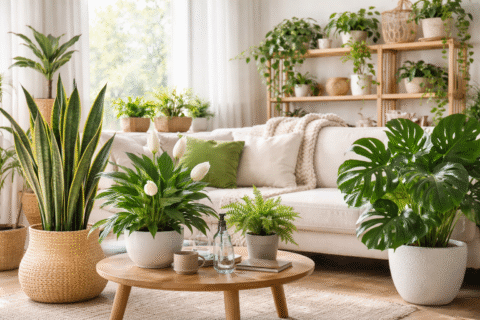
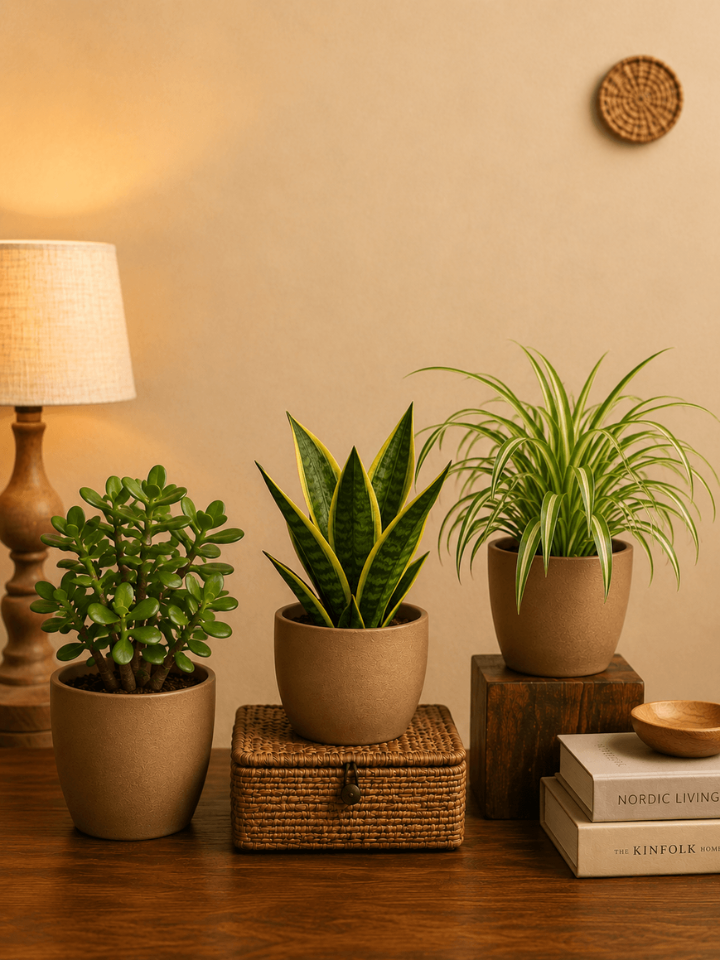
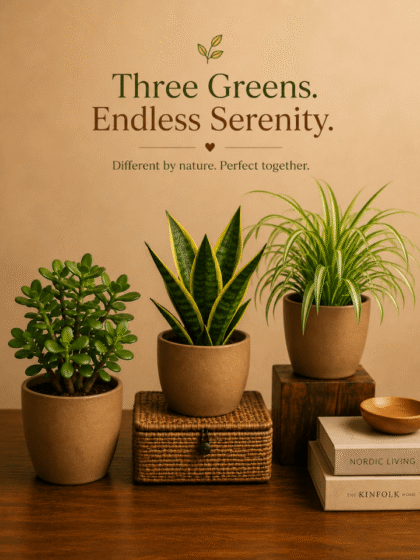
- Snake plant: upright, sword-like leaves bring a clean, modern line to a bedroom corner or entrance. It needs water only every two to four weeks.
- ZZ plant: glossy, dark leaves look polished on a console table and cope well with low light and irregular watering.
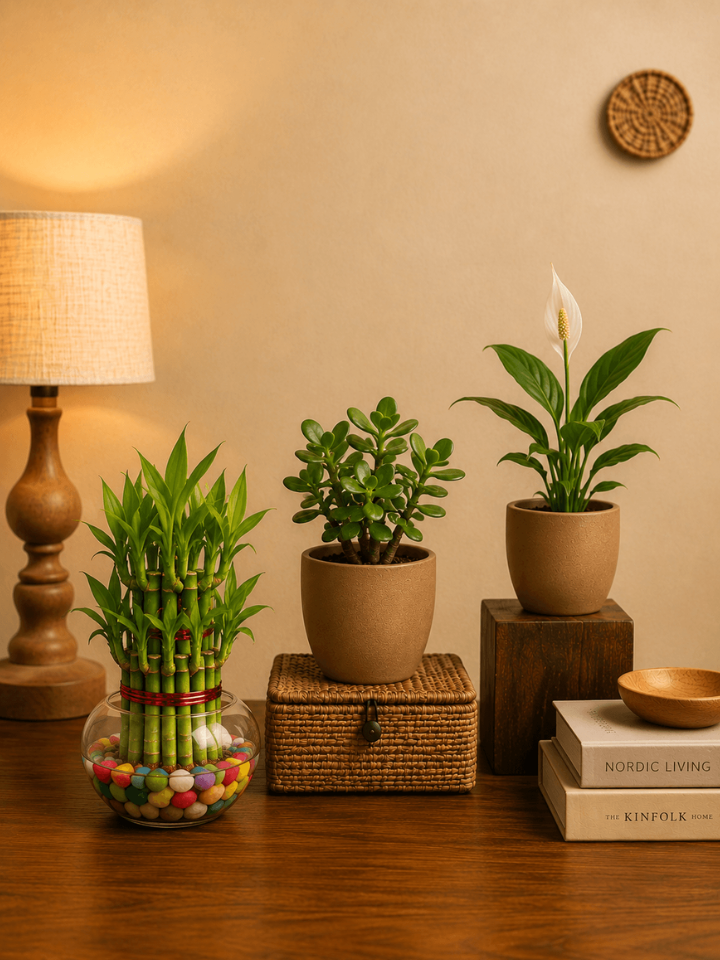
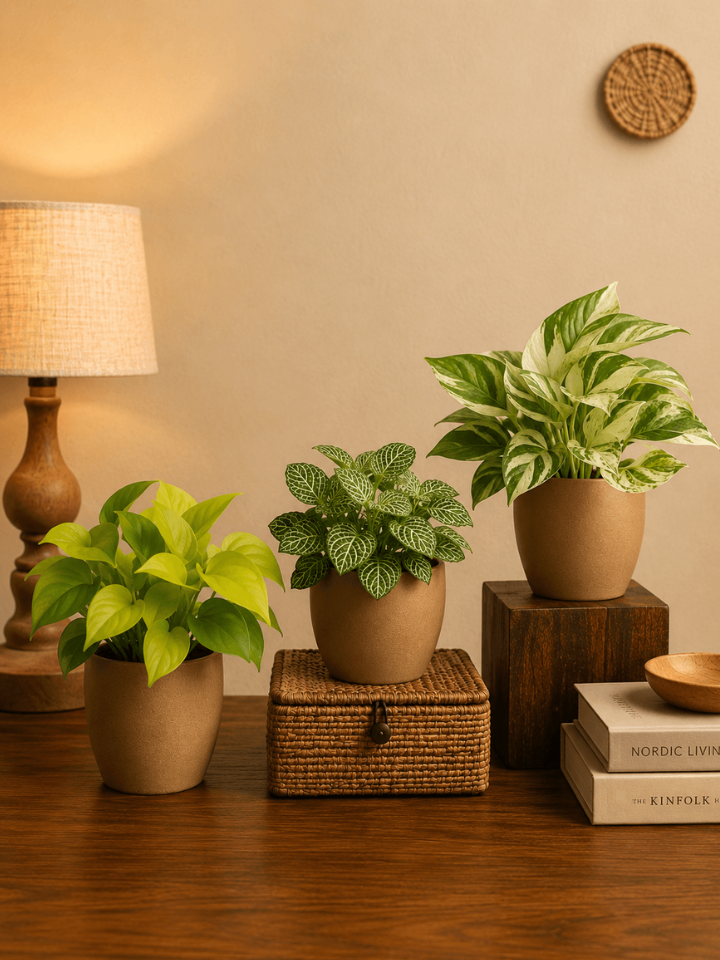
- Golden money plant: trails beautifully from a shelf or climbs a moss stick, and grows in either soil or water.
- Spider plant: arching striped leaves suit a hanging basket, and the ASPCA lists the spider plant as non-toxic to cats and dogs.
- Peace lily: dark leaves and white blooms soften a room, and the peace lily indoor plant droops visibly when thirsty, then perks up within hours of watering, which makes it a helpful early warning.
- Lucky jade: thick, coin-shaped leaves store water, so a jade money plant needs little more than a sunny windowsill and occasional watering. Its rounded shape suits a desk or bookshelf.
To build a collection that works around your routine, browse plants that require little care, compact low maintenance office plants for your workspace, and low maintenance bedroom plants that suit softer light. First-time growers will also find these starter plants for first-time growers a useful shortlist.
A quick note for pet owners: snake plant, ZZ plant, money plant, peace lily and jade are all toxic to cats and dogs if chewed, so place them well out of reach.
How do I keep a recovering plant looking good at home?
A plant in recovery does not have to spoil the look of your room. A few small styling habits keep things tidy while new growth comes in.
- Trim with intent: remove damaged leaves cleanly at the base so the plant looks fuller rather than patchy.
- Use a cover pot: a ceramic, cane or brass planter hides a plain nursery pot and ties the plant into your décor.
- Create a recovery corner: move struggling plants to a bright but less prominent spot until they bounce back, and bring your healthiest specimens forward.
- Group in odd numbers: clusters of three plants at different heights look intentional and also raise humidity.
- Finish the soil surface: pebbles, bark or moss on top make any pot look styled and cared for.
Frequently asked questions
Why are the leaves on my indoor plant turning yellow?
Yellow leaves most often mean the soil is staying too wet. Check whether the soil is damp two knuckles deep and whether the pot drains. If the soil is dry, the plant may be thirsty or short of nutrients. A single old leaf yellowing now and then is normal.
Why are my plant's leaf tips turning brown?
Brown tips usually come from dry air, irregular watering or fertiliser build-up. Move the plant away from AC vents and fans, water when the top layer is dry rather than on a fixed schedule, and flush the soil with plenty of water if you see a white crust.
Can a dying plant come back to life?
Yes, a dying plant can usually recover if it still has some firm, healthy roots or green stems. Fix the cause, trim dead parts and wait for new growth, which typically appears within two to four weeks. If the roots are fully rotten, root a healthy cutting in water instead.
How often should I water my plants in Kolkata?
There is no fixed schedule; water when the top two to three centimetres of soil feel dry. In Kolkata that often means every few days in summer, much less often in the humid monsoon, and less again in winter. Always check the soil before you pour.
Should I cut off yellow or brown leaves?
Yes, remove leaves that are fully yellow or brown, because they will not turn green again. Cut cleanly at the base of the leaf stalk with clean scissors. For leaves that are only partly brown, trim the dead area and leave the green part to keep feeding the plant.
How do I know if my plant has root rot?
Root rot shows up as wilting in moist soil, yellowing leaves, a soft stem base and a sour smell. To confirm it, slide the plant out of its pot. Rotten roots are brown or black and mushy, while healthy roots are firm and white or light tan.
Why does my new plant keep dropping leaves after delivery?
A new plant often drops a few leaves while it adjusts from nursery conditions to indoor light and air. Give it bright, indirect light, water only when the topsoil is dry and avoid repotting for two to three weeks. Steady new growth means it has settled in.
Which houseplants are safe for cats and dogs?
Spider plant, areca palm and calathea are listed as non-toxic to cats and dogs by the ASPCA. Many popular houseplants, including money plant, snake plant, peace lily and jade, are toxic if chewed. Check each plant individually rather than trusting a general “pet-friendly” label.
Is tap water bad for houseplants?
Tap water is fine for most potted plants. If your supply is heavily chlorinated, letting it stand in an open container overnight helps some of the chlorine escape and brings it to room temperature. Hard or salty borewell water can leave crust on the soil, so flush pots occasionally.
Can plants survive in an AC room?
Plants do not die simply because a room has AC, but cold, dry airflow can damage them. Keep pots at least 1.5 to 2 metres from the vent and out of the direct air stream, group plants together for humidity and check the soil more often, since AC dries it faster.
What is the best low-maintenance indoor plant for a busy person?
The snake plant is one of the best choices for a busy person, because it needs water only every two to four weeks and tolerates low light. ZZ plant, golden money plant and succulents are other forgiving options that cope well with missed waterings.
Start again with a plant that suits your life
Losing a plant is frustrating, but it is also the best teacher. Once you know what went wrong, the next one is far more likely to thrive. At Plantaeroot, every plant is raised at our own nurseries in Rishra and Joka, so it is already used to eastern India’s heat and humidity before it reaches your home.
If you are looking for indoor plants in Kolkata or anywhere in India, you can buy house plants online from our nursery and check the cities we deliver plants to.
Choose one plant that matches your light and your routine, follow the 10-minute weekly check, and let your home stay green without the guesswork.